
A Summary of Trump’s 2025 Travel Ban
Immigration policies can change quickly, making it difficult to understand how a new travel ban affects people seeking entry to the United States. In 2025, the Trump administration issued a proclamation restricting entry for nationals of multiple countries, with different rules depending on the country and the type of entry involved.
The policy was later expanded at the end of 2025, meaning that understanding the original June restrictions alone does not provide the complete picture. This summary explains the major provisions of the Trump travel ban, who was affected, the exceptions that applied, and how the policy changed.
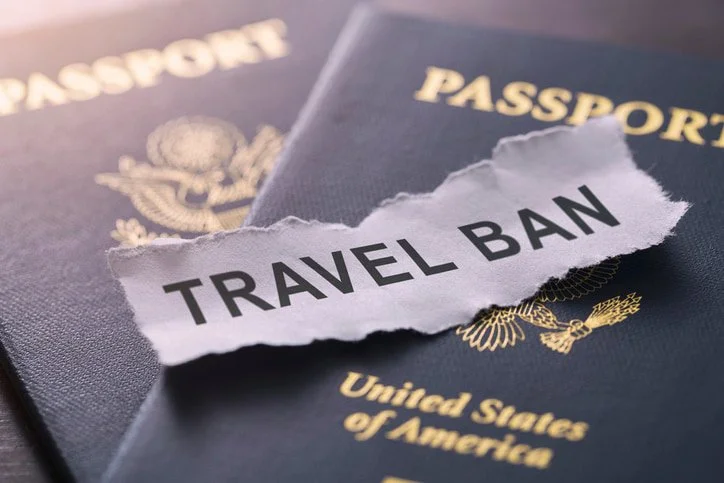
What Was Trump’s 2025 Travel Ban?
On June 4, 2025, President Donald Trump issued Presidential Proclamation 10949, titled “Restricting the Entry of Foreign Nationals to Protect the United States From Foreign Terrorists and Other National Security and Public Safety Threats.” The proclamation took effect at 12:01 a.m. Eastern Daylight Time on June 9, 2025.
The policy imposed either full or partial restrictions on nationals of 19 countries. The administration cited concerns involving screening, vetting, identity management, information sharing, national security, and public safety as reasons for the restrictions.
Importantly, the June proclamation generally applied to affected foreign nationals who were outside the United States and did not have a valid visa when the restrictions took effect. It was therefore not simply a blanket prohibition against every person from an affected country.
Which Countries Were Affected by the 2025 Travel Ban?
The original June 2025 restrictions divided the travel ban countries into two groups. The 12 countries subject to full entry restrictions were:
Afghanistan
Burma (Myanmar)
Chad
Republic of the Congo
Equatorial Guinea
Eritrea
Haiti
Iran
Libya
Somalia
Sudan
Yemen
The exact restrictions varied by country and visa category. Seven additional countries faced partial restrictions:
Burundi
Cuba
Laos
Sierra Leone
Togo
Turkmenistan
Venezuela
What Is the Difference Between a Full & Partial Travel Ban?
A full suspension generally places broader restrictions on entry, covering both immigrant and nonimmigrant entry for nationals of the designated country, subject to applicable exceptions and waivers.
A partial suspension is narrower. Under the June 2025 proclamation, certain countries faced restrictions affecting specified visa categories rather than a complete suspension of entry for all covered individuals. The proclamation specifically addressed immigrant and nonimmigrant categories and identified the restrictions applicable to each country.
Because the rules can differ depending on nationality, visa classification, and individual circumstances, someone from a country subject to a partial restriction should not assume that the same rules apply to everyone from that country.
Who Was Affected by Trump’s 2025 Travel Ban?
The restrictions primarily affected certain foreign nationals who were outside the United States and lacked a valid visa on the applicable effective date.
The June proclamation also included categorical exceptions. For example, lawful permanent residents and certain existing visa holders were among those excluded from the restrictions. Certain diplomatic and official visa categories were also excepted, along with other specifically identified groups.
This distinction is important when evaluating US travel ban news. Headlines describing a country as “banned” do not necessarily mean that every national of that country is prohibited from entering the United States.
What Were the Exceptions to the 2025 Travel Ban?
The June proclamation included several exceptions and allowed for case-by-case waivers in certain circumstances. Among the categorical exceptions were lawful permanent residents, certain existing visa holders, specified diplomatic and official travelers, athletes participating in major international competitions, and certain special immigrant visa holders.
The proclamation also allowed case-by-case waivers when travel was determined to be in the national interest under the circumstances described in the proclamation.
Because exceptions can depend on the specific proclamation, visa classification, and individual circumstances, relying on a general description of an exception may not be enough to determine whether a particular traveler qualifies.
Why Did Trump Impose the 2025 Travel Ban?
The Trump administration said the restrictions were intended to address national security and public safety concerns. The June proclamation pointed to deficiencies involving screening and vetting information, identity management, and information sharing in the affected countries.
The administration also stated that the restrictions were intended to encourage foreign governments to improve information-sharing and screening practices, enforce U.S. immigration laws, and advance foreign policy and counterterrorism objectives.
The policy was controversial and generated significant discussion about its effects on families, travelers, and immigration applicants.
When Did Trump’s 2025 Travel Ban Take Effect?
The original proclamation was issued June 4, 2025, and became effective June 9, 2025, at 12:01 a.m. EDT. However, that was not the final version of the policy. The administration continued reviewing the countries affected by the restrictions and later issued another proclamation in December 2025.
What Happened to the 2025 Travel Ban Later?
On December 16, 2025, President Trump issued Presidential Proclamation 10998, expanding and modifying the restrictions. The new proclamation continued full restrictions on the original 12 countries, added full restrictions on additional countries, and added restrictions involving Palestinian Authority-issued travel documents. It also modified the countries subject to partial restrictions.
The expanded restrictions took effect January 1, 2026. The State Department reported that the updated policy fully or partially suspended entry and visa issuance for nationals of 39 countries, along with individuals using travel documents issued or endorsed by the Palestinian Authority.
The later proclamation also changed some of the exceptions that had applied under the original June policy. For example, certain family-based immigrant visa exceptions and Afghan Special Immigrant Visa exceptions from the earlier proclamation were no longer available under the updated rules.
For that reason, anyone researching Trump travel ban news should pay attention to the date of the information being reviewed. Rules that applied in June 2025 were not necessarily the same rules in effect after January 1, 2026.
Understanding the Travel Ban & Your Immigration Options
The 2025 travel restrictions illustrate how quickly U.S. immigration policies can change and why relying on outdated information can create serious problems for prospective travelers and visa applicants. The distinction between full and partial restrictions, applicable exceptions, visa categories, and effective dates can all affect an individual's situation.
If you have questions about how the travel ban or other US travel ban news may affect your ability to enter the United States, Hurtubise Weber Law can help you understand the immigration rules that may apply to your circumstances. Contact our firm to discuss your situation and learn about your available options in San Francisco and San Jose, CA.
Frequently Asked Questions About the 2025 Travel Ban
The details of the 2025 travel restrictions can be complicated, particularly because the policy changed during the year. The following answers address some common questions, but individual circumstances can require a more specific legal analysis.
-
The original June 2025 proclamation was modified by the December 2025 proclamation, which took effect January 1, 2026. The later proclamation continued, expanded, and modified the restrictions.
-
Lawful permanent residents were specifically excluded from the June 2025 restrictions, and the December 2025 proclamation also lists lawful permanent residents among its exceptions.
-
Not necessarily. The June 2025 proclamation stated that visas issued before its effective date were not revoked under that proclamation. The later rules also contain specific provisions concerning visa issuance and entry, so travelers should evaluate the rules applicable to their individual circumstances.
-
Certain case-by-case waivers may be available when the applicable proclamation permits them and the required government officials determine that the travel serves a qualifying U.S. national interest. The availability and requirements depend on the circumstances.