
The History of Immigration in the United States
The history of immigration in the US is closely connected to the development of the country itself. People have migrated to what is now the United States for thousands of years, while later waves of immigration helped shape its communities, economy, culture, and laws.
U.S. immigration policy has also changed considerably over time. Periods of relatively open immigration were followed by laws that restricted entry based on nationality, race, or the number of immigrants allowed into the country. Understanding this history provides important context for today's immigration system.
Immigration Before the United States
People lived in North America long before the United States existed. Indigenous peoples had established communities and extensive cultures across the continent for thousands of years.
Beginning in the late 15th century, European exploration brought new migration to North America. Spanish, French, English, Dutch, and other Europeans established settlements and colonies at different times.
These arrivals dramatically changed the continent. European colonization brought new populations, political systems, economies, and diseases while profoundly disrupting Indigenous communities.
Immigration During the Colonial Era
During the 17th and 18th centuries, European immigration contributed to the growth of Britain's North American colonies. English settlers were joined by people from other parts of Europe, including Germans, Scots-Irish, Dutch, and others.
Not everyone arrived voluntarily. The forced migration of enslaved Africans became a major part of colonial America's population and economy. Millions of Africans were forcibly transported to the Americas over the course of the transatlantic slave trade.
Colonial populations therefore developed through a combination of voluntary migration, forced migration, and the displacement and survival of Indigenous peoples.
Immigration After American Independence
After the United States declared independence in 1776 and established a new federal government, immigration remained important to population growth.
The early federal government generally did not impose the comprehensive immigration controls that exist today. The Naturalization Act of 1790 established the first federal rules for naturalization and limited naturalization to “free white persons” of good moral character.
Over the following decades, federal immigration policy gradually became more developed. The government began establishing rules concerning who could enter the country, who could become a citizen, and how immigration would be administered.
The Rise of Mass Immigration in the 19th Century
The 19th century brought enormous immigration to the United States. Large numbers of people arrived from Ireland, Germany, Britain, Italy, Eastern Europe, and other regions. Economic opportunity, political instability, religious persecution, famine, and other conditions encouraged people to leave their home countries. Immigration helped fuel population growth and supplied workers for expanding industries, agriculture, railroads, and cities.
At the same time, immigration generated political opposition. The federal government began adopting more restrictive policies toward certain immigrant groups. The Chinese Exclusion Act of 1882, for example, suspended the immigration of Chinese laborers and represented a major shift toward federal immigration restrictions based on nationality.
Immigration in the Early 20th Century
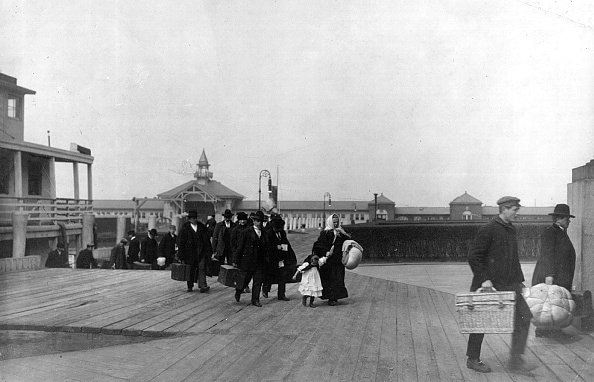
Immigration continued at high levels during the early 20th century, with millions of people arriving from Southern and Eastern Europe. Ellis Island, which operated as an immigration processing station in New York Harbor from 1892 to 1954, became one of the most recognizable symbols of American immigration. Millions of immigrants passed through the facility during its years of operation. Immigration was also increasingly restricted during this period. The Immigration Act of 1917 expanded restrictions, including literacy requirements, while later legislation established broader numerical limits.
The Immigration Quota Era
The 1920s marked a major turning point in the history of immigration to the United States. The Emergency Quota Act of 1921 introduced numerical limits based on national origins. The Immigration Act of 1924, also known as the Johnson-Reed Act, expanded the quota system and established a national-origins formula designed to restrict immigration from certain regions.
These laws significantly reduced immigration from Southern and Eastern Europe and effectively excluded immigrants from many Asian countries. The quota system remained an important part of U.S. immigration policy for decades.
Immigration During the Great Depression & World War II
The Great Depression dramatically reduced immigration to the United States. Economic hardship discouraged migration, while some immigrants left the country and returned to their countries of origin. World War II also influenced U.S. immigration policy. The United States faced questions involving refugees, displaced people, national security, and immigration restrictions. During and after the war, the country gradually expanded certain pathways for refugees and displaced persons. These developments contributed to later changes in immigration policy.
Immigration in the 21st Century
Modern immigration policy has been shaped by several major changes. The Immigration and Nationality Act of 1965 eliminated the national-origins quota system and established a preference system that emphasized family reunification and employment-based immigration. Immigration from Latin America, Asia, Africa, and other regions subsequently became an increasingly important part of the country's population.
Today, U.S. immigration law includes family-based immigration, employment-based immigration, temporary nonimmigrant classifications, humanitarian protections, naturalization, and other legal pathways. Immigration policy continues to evolve as Congress, federal agencies, courts, and presidential administrations address issues involving border security, legal immigration, visas, and citizenship. The history of immigration in America therefore remains an ongoing story rather than a subject confined to the past.
Understanding the History of Immigration
The history of immigration in the United States includes periods of expansion, restriction, opportunity, discrimination, and significant legal change. Understanding these developments can provide useful context for the immigration laws and policies that affect people today.
If you have questions about how current U.S. immigration law may apply to your circumstances, Hurtubise Weber Law can help you understand your potential options and next steps. Contact our firm to discuss your immigration matter with a legal team serving San Francisco and San Jose, CA.
Frequently Asked Questions About U.S. Immigration History
The history of U.S. immigration includes centuries of migration, changing laws, and significant shifts in government policy. These frequently asked questions provide a brief overview of some important developments.
-
People migrated to North America thousands of years before the United States was established. European migration began centuries later, with Spanish, French, English, Dutch, and other settlers establishing colonies and settlements.
-
The federal government began establishing immigration-related restrictions during the 19th century. The Chinese Exclusion Act of 1882 was a major example of federal restrictions based on nationality.
-
The national-origins quota system was a method of limiting immigration based on national origin. Laws enacted in the 1920s significantly restricted immigration from certain regions and remained influential until the system was replaced in 1965.
-
The Immigration and Nationality Act of 1965 eliminated the national-origins quota system and established a new framework that emphasized family reunification and employment-based immigration.
-
Immigration has played a significant role in the country's population growth, workforce, communities, and cultural development. At the same time, debates over immigration have influenced major changes in U.S. law and public policy.